
Preventative war as a strategy for peace
Sofia Lemus
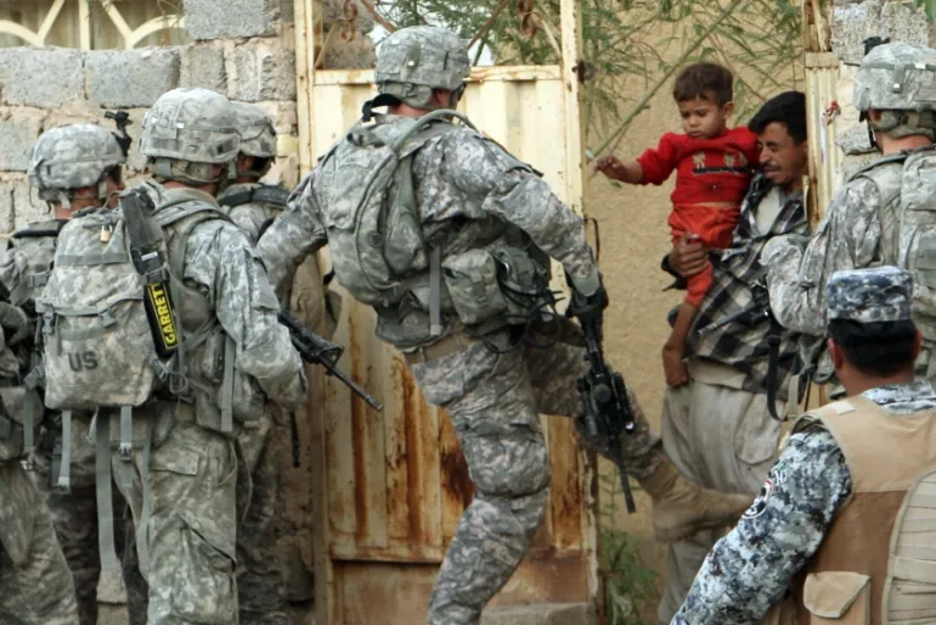
In present times, peace becomes a scarce resource, as states erupt into wars and the international organizations that had once successfully promoted peace try to dissolve present disputes. One strategy that has been used throughout history; and remains quite controversial, is preventative war strategy. Preventative attacks are used under the justification that it is best to strike a rival as it grows stronger, hence not giving them the possibility to attack first and become more powerful. Scholars say there are three key rules that lead to preventative war: fear of the future, a change in power dynamics, and the assumption that the threat should be stopped through military action.
While this strategy might help neutralize a potential threat, preventative war gets rid of any positive peace and instead institutionalizes an environment of negative peace, which can lead to further conflict in the long-term. The Iraq War, which lasted from 2003-2011, is an example of how the United States’s use of preventative war as a security strategy fails to create lasting peace. Iraq was already in a complicated political situation before the war: with a one-party state under Sadam Hussein and the UN imposing economic sanctions and performing inspections, all to make sure Iraq stuck with the Security Council Resolution and did not develop weapons of mass destruction. Nonetheless, the United States government, under the Bush administration, and the United Kingdom, under PM Tony Blair, decided to invade Iraq in 2003 under the pretenses of Hussein still holding forbidden weapons and that the September 11 attacks were in partnership with the Iraqi government. Germany, France, Russia, and other states opposed this measure, but forces were deployed nonetheless. It has now been proven that these weapons were never found, and future investigations found no relationship between Al’ Qaeda and the Iraqi government.
During the war, Iraqi forces mostly retreated quietly and left little damage behind them, but death estimates from the invasion until 2006 report figures of up to 650,000 people. Not only were there unnecessary deaths caused by this “preventative” war, but Iraq suffered from deep structural issues as an aftermath. The Iraqi economy was left in shambles, and a civil war ensued. Debt rose, and guerrilla warfare led to further violent deaths, with the political situation becoming even worse than it was like at the beginning.
As a student of IR and having grown up in a country whose dictator is currently striking business deals with the US, I see the Iraq War as one of many “interventions” where global powers attack when convenient, under the pretext of a threat, and later leave the affected state with further problems. The preventive war strategy prioritizes hypothetical threats, making it susceptible to miscalculation. Instead of destroying conditions needed for positive peace, states should intervene in a different way: helping in institution building, diplomacy, and promoting human rights. Even though these methods might sound idealistic, they are better than the current actions being taken. Trying to prevent war by starting it is a bold choice, better stated by Ghandi, “an eye for an eye makes the world blind”.
The ‘children of hate’: the aftermath of the Rwandan Genocide
Sofia Lemus
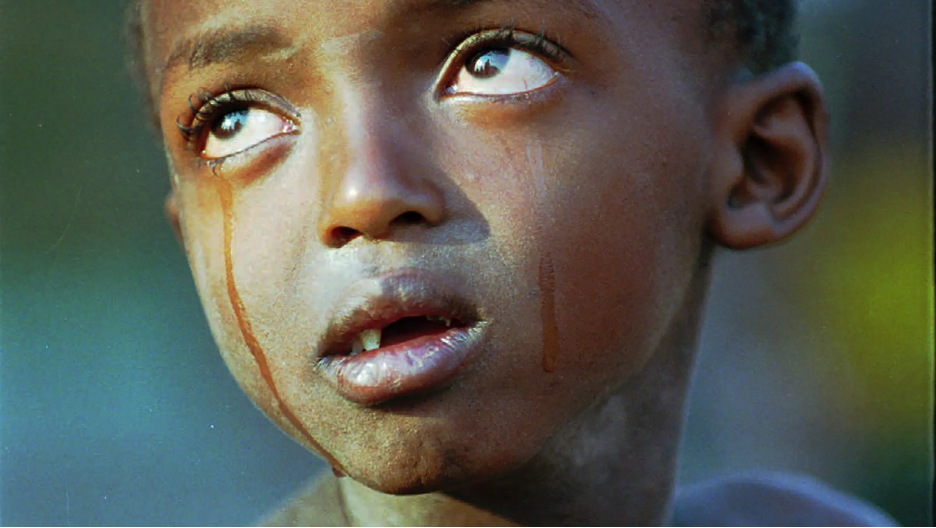
When thinking of Rwanda and the genocide that tragically took place there in 1994, we tend to sympathetically think about the Tutsi people that were killed and the survivors it left, but there is a portion of the victims that are hardly brought into consideration: the children who were born as an outcome of rape. Also known under the term “children of hate”, an estimated 10,000-25,000 (Denov) babies were born as a result of sexual assault during the genocide, leaving the mothers in extremely difficult positions of poverty, trauma, and isolation. Furthermore, even though they were not under direct conflict, the offspring of survivors have been exposed to physical and structural violence which has left them unfairly behind their peers.
An examination of the situation uncovers an underlying outdated system that governments and NGOs have not tried to repair. Structural violence, first used as a term by Galtung in 1969, is only classified as violence when it is considered to be preventable (Lee, 2016). So even though it is not direct and personal, it is the structures and institutions, which are human made, that cause indirect harm. The suffering of these Rwandan children is in part considered a structured attack, with their everyday lives being quite challenging. Things such as not being able to enroll into schools, due to school registration forms requiring a father’s signature, have made it more difficult for them to gain access to education and advance professionally. Others have also been left orphaned, with their mothers not receiving the adequate care and sadly passing away from diseases such as AIDS.
The difference between the Tutsi and Hutus was not an ethnic one, but a manipulation of socio-economic identity regarding the ethnicities which led to the genocide in the first place. The structures that were in place (which benefited the Tutsi), led to an animosity which is now being taken out on the children of victims. Being born half Tutsi and half Hutu led to them being seen as outcasts and even named “little killers”, placing the new youth in a dangerous position where anger, trauma, and resentment is physically unleashed on them. If not abandoned or beaten by their own mothers, these new victims were rejected by society, with violent acts of hatred used against them.
When speaking to these children 30 years after the genocide, researchers found that many of them voiced how they would like to be formally recognized as victims and be considered for reparations themselves (McGill University). Unlike other post-conflict groups, this generation has been overlooked, leading to silencing those that are supposed to heal. Their struggle compels us to rethink about justice and conflict management as an ongoing
My own positionality in the white-savior complex of NGOs
Giulia Liberatore

In tutorials, we discussed how problematic NGOs really are when attempting to build “peace” on the ground, including examples of Westerners’ “charitable work”, who would come over to help the “poor African children”, with little else in terms of understanding, sensitivities or, as we’ve seen, even training in the things they purport to be helping with. This raises questions about accountability: was it ever about the community’s needs being fulfilled, or was it only about Westerners feeling like they ‘did good’? As the discussions progressed, I started noticing troubling resemblances with my own experiences and began questioning my own positionality within non-profits’ white-savior complexes.
The narrative I told myself was that I started volunteering for the food-pantry in December 2020 due to overwhelming need. Immediately, I noticed volunteers’ problematic behaviors of berating clients who “broke the rules”: a childless couple requesting baby wipes, clients falsely shopping for two families, or ‘stealing’ from the returns bins–as if they were committing some heinous crime and not doing it out of intense need and as a product of accumulated structural inequities. But these problematic instances seemed always far-removed from myself: I never acted that way…
The more I reflected on the tutorials, however, the more I realized my own complicity. The real reasons I volunteered was the low-commitment schedule and because I needed school credits, and after fulfilling those 400 hours, I was nominated for the Youth Award. Even at the time, this felt wholly undeserved; I knew I’d volunteered for all the wrong reasons. While I received an award, the clients, the mothers dragging their screaming children along trying to provide for their family, their everyday battles continued unabated and unrecognized. Yet in the award interview, I never once mentioned this, instead saying that volunteering “was a really nice feeling”. What exactly gave me “a nice feeling”? Witnessing the sheer suffering and lack of options the clients faced unrelentingly? Or was it my own insertion into that situation, and a superficial feeling of having “contributed”? Perhaps I contributed in terms of immediate food distribution, but I did so in an environment of clear hierarchy between the volunteers and the clients, which replicated, reinforced and perpetuated the structural inequities that produced this food insecurity in the first place, and I was complicit in it.
As Pugh (2004) mentions, the role of non-profits (international and otherwise) is not to enforce top-down approaches that ‘accidentally’ replicate those same structural power dynamics they purport to combat; their role, if anything, is to address the deep-rooted issues that created those disparities in primis. I believe this can only occur if Western non-profit workers put away their pride and critically question their positionality in, and crucially, their contribution to, the very system that keeps the destitute oppressed. Only then can a restructuring occur whereby these organizations shift their center towards those in need–where the food-pantry is truly at the service of the clients’ needs rather than
berating them for “breaking” top-down-enforced rules–to instead act as a support brace for grassroots initiatives spearheaded by the very people they serve, to take root and flourish into a peace that truly works for them.
References
Pugh, M. (2004). Peacekeeping and critical theory. International Peacekeeping, 11(1), pp.39–58. doi:https://doi.org/10.1080/1353331042000228445.
Justice, Peace, and Conflict Studies
Cole Schubert
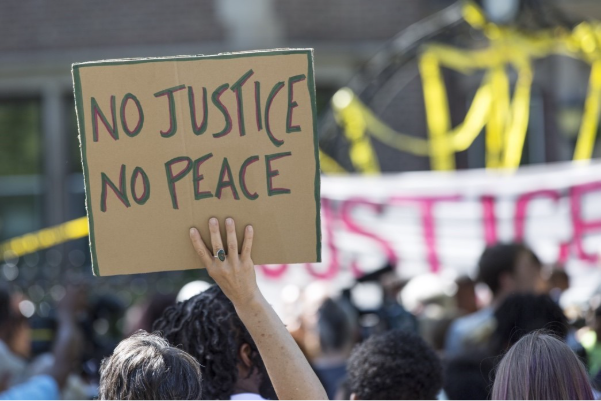
Positive peace is difficult to attain, and even more and arduous to sustain, when the conflict resolution process focuses exclusively on avoiding physical violence. This is where justice enters the equation. To encourage the discipline to prioritise justice, I suggest an amendment to the title of Peace and Conflict Studies. I propose that we rename this field to Justice, Peace, and Conflict Studies.
Names carry power. Renaming the discipline thrusts justice to the forefront; this orients attention within the political and scholarly communities towards justice. Discursive work has previously explored how subtle word choices can shift argument framing. I have found discourse scholars’ work convincing and flexible in application, and I employ discursive lenses frequently. This lens reveals that the current name of the field draws attention to peace and conflict; the limits of our vocabulary curtail our discourse and the extent to which we can centre justice and positive peace pursuits in our thinking. Framing the discipline as Justice, Peace, and Conflict Studies illustrates the need for long-term and justice-centred thought. That justice is given titular pre-eminence reflects the precondition that communities cannot have positive peace without justice.
How do we achieve justice? Justice processes are often bogged down by rigid hierarchic and bureaucratic structures, as exemplified by the ICC and ICJ’s case on the Rohingya genocide. The stateless Rohingya people continue to face genocide and structural violence in Myanmar, often resorting to treacherous boat crossings to flee the present dangers. The UNHCR continues to call on states to provide critical lifesaving support for the refugees. They state that greater international and regional action is needed to end fighting in Myanmar and restore peace and justice (UNHCR Asia Pacific, 2025). The ICJ’s slow-moving process and inability to centre the victims has left the Rohingya crying out for peace or justice (Singh, 2020).
The road to achieving peace and justice is incredibly complex, but we must keep victims and affected communities centred in our writing, minds, and culture. Allowing victims to actively participate in shaping justice proceedings would greatly enhance their belief in the justice institutions supposedly working on their behalf. As the global community continues to answer large questions about how to achieve justice, amplifying the voices and needs of survivors in our pursuit leaves me with the most optimistic outlook as to the best way to create effective solutions for peace from their perspective. Albeit small, the renaming of the discipline would carry the power to explicitly underscore the field’s commitment to this pursuit.
References
“Focus on Saving Lives, Urges UNHCR as More Rohingya Flee by Sea.” UNHCR Asia Pacific, United Nations, 8 Jan. 2025, www.unhcr.org/asia/news/press-releases/focus-saving-lives-urges-unhcr-more-rohingya-flee-sea.
Singh, Shannon Raj. “Rohingya Symposium: Justice out of Reach–the Need to Better Connect Accountability Proceedings to Atrocity Survivors.” Opinio Juris, August 26, 2020. https://opiniojuris.org/2020/08/26/rohingya-symposium-justice-out-of-reach-the-need-to-better-connect-accountability-proceedings-to-atrocity-survivors/.